


Halloween special:
Save 45%Buy 3 Get 2 Free
Ends in 01:30:00



Hack Your Tummy Bundle
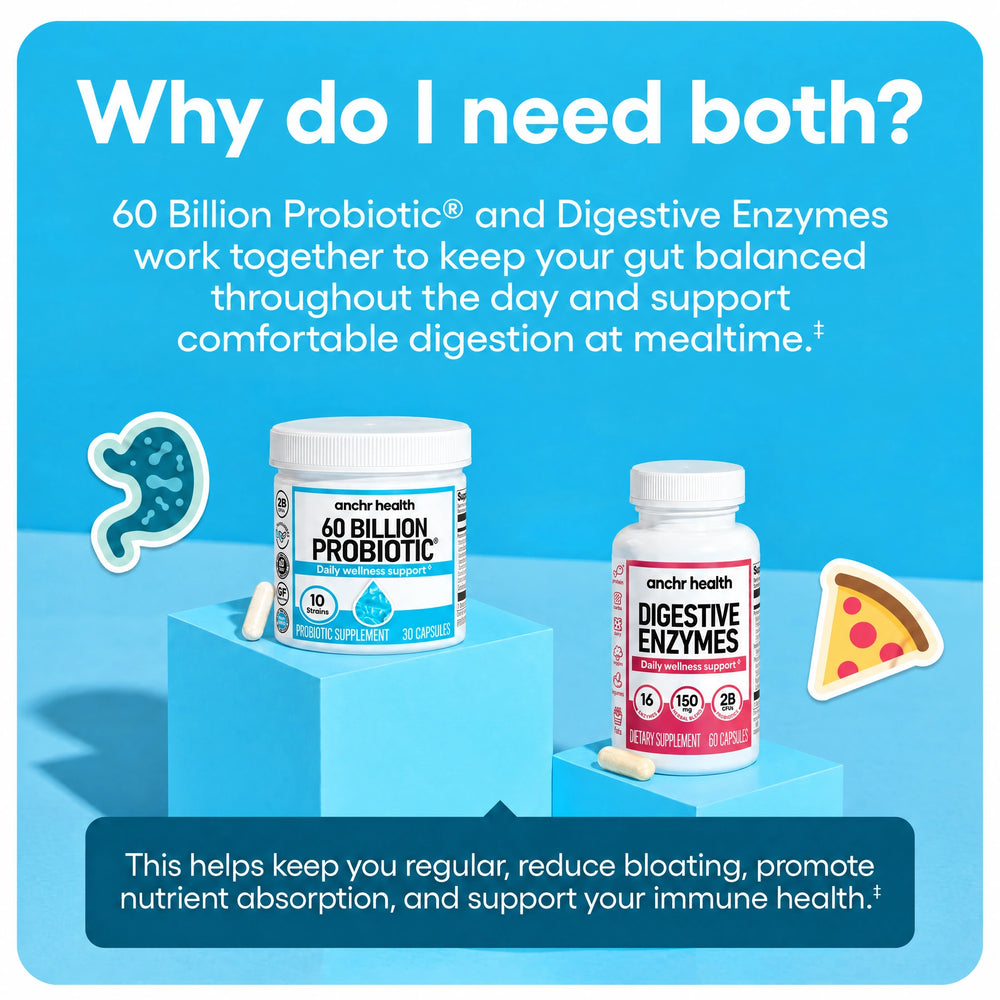
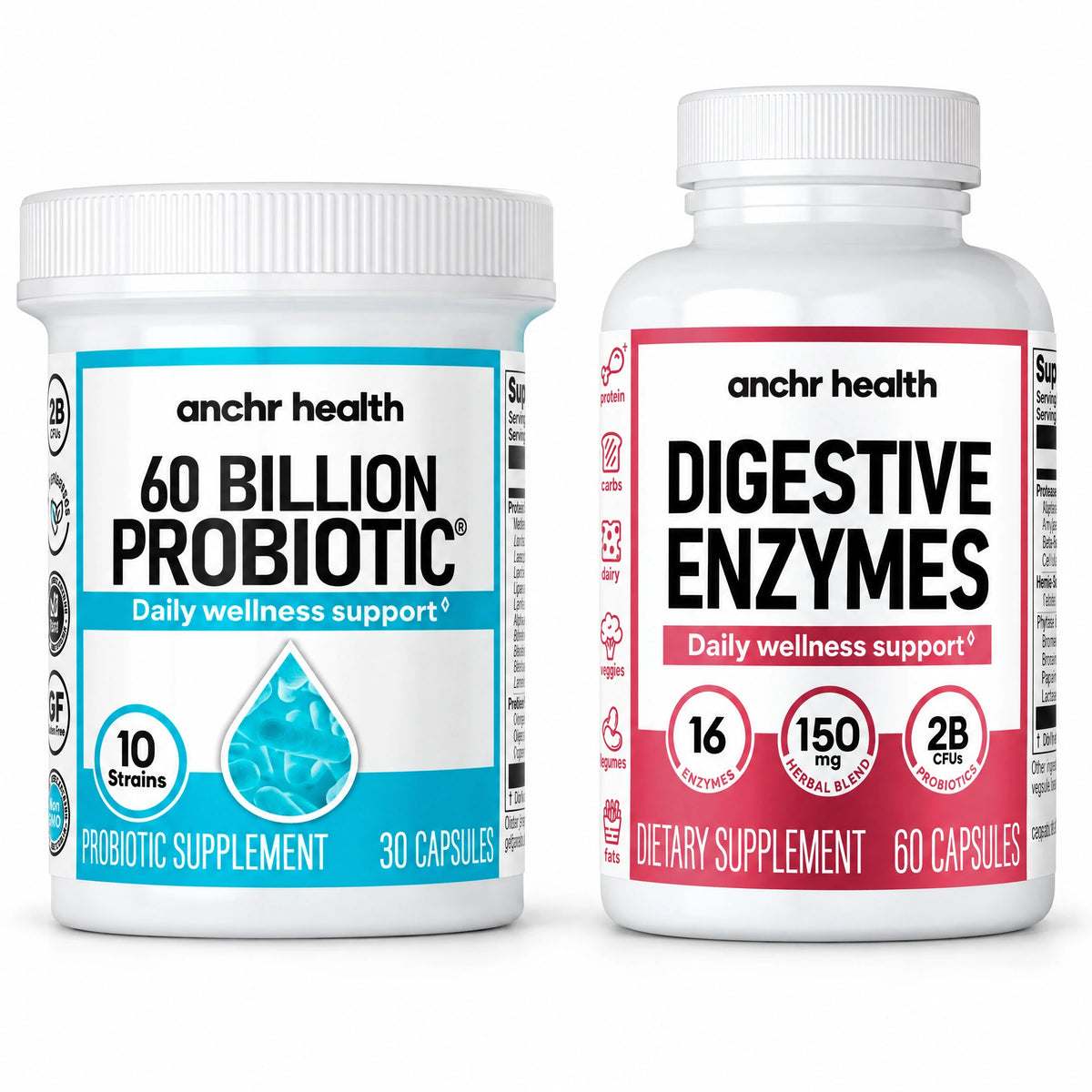
- 60 billion probiotics + 16 digestive enzymes working together to help reduce bloating, ease digestion and keep your gut balanced.
- Helps reduce bloating
- Aids digestive regularity
- Supports comfortable digestion
- Supports gut health
- Feel lighter after every meal
- Break down food without the discomfort
- Rebalance your gut microbiome
- Absorb more from every bite
- One simple routine. Two powerful products.
Select your bundle
Customer favorite!
Less than 1% return this product.
If any of these sound familiar, your gut is asking for help
- Your jeans feel tighter by the end of the day
- Meals sit heavy for hours after you eat
- You’ve started cutting foods you love
- Some days you’re regular, some days you’re not
- You’ve tried a probiotic and couldn’t tell it was doing anything
What this bundle does for your gut
The pink capsule brings 16 digestive enzymes to your meal to break down protein, starch, fat, milk sugar and plant fiber. The blue capsule adds 60 billion live cultures from 10 strains every day, plus prebiotic fiber, in an acid-resistant capsule designed to reach the gut.
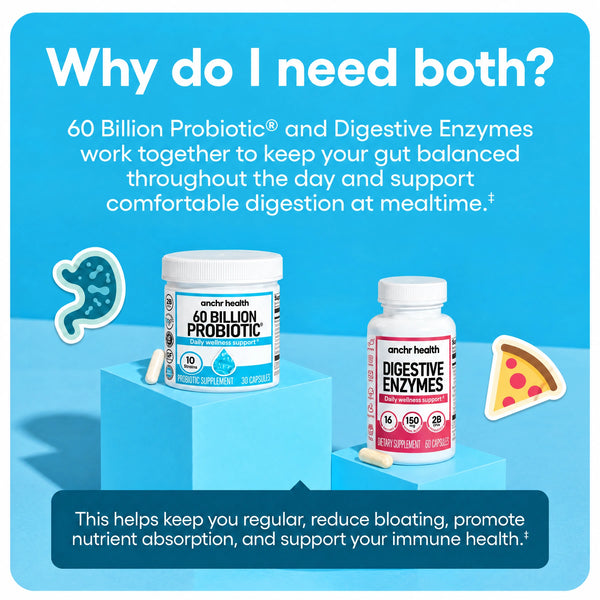
Together they help keep you regular, reduce bloating, promote nutrient absorption and support your immune health.
How to take it
1 blue probiotic capsule a day. 1 pink enzyme capsule with a meal. Or take both together with dinner. Follow the directions on each label.
Key ingredients
60 Billion Probiotic: 60 billion CFUs from 10 strains, plus a 150 mg prebiotic blend of organic inulin and organic acacia fiber.
Digestive Enzymes: a 16-enzyme blend (protease, amylase, lipase, lactase, cellulase, alpha-galactosidase and more), a 150 mg herbal blend of peppermint leaf and ginger root, and 2 billion CFUs of Bacillus probiotics.
Developed with doctors
Trust your gut to the experts
A formula developed with doctors, then third-party tested for safety, purity, and potency. Here’s what goes into every duo.
- 60 billionLive cultures in every daily capsule
- 16Digestive enzymes with every meal
- 13Named probiotic strains across the duo
Why we built itAnchr
“It may not be what you ate. It may be what happens to it after it leaves your plate.”
The idea behind Hack Your Tummy: one capsule for your meal, one for your gut, every day.
How it works once you start
Enzymes go to work at your first meal. Gut changes land between day 3 and day 10.
Day 1
First mealEnzymes meet your first meal
16 digestive enzymes break down the foods that usually sit heavy: protein, fat, dairy, starch. Most people notice the difference after the meal, not days later.
Days 3–7
Results beginCultures take hold
60 billion live cultures from 10 strains get past stomach acid in an acid-resistant capsule and start supporting the balance of your gut, while the enzymes keep each meal from adding to the load.
Days 7–14
ResultsBalance returns
Meals stop being an event. Bloating eases, digestion smooths out, and regularity starts feeling normal instead of forced.
Week 3+
New baselineYour new baseline
Enzymes handling each meal, probiotics holding the balance between them: steady digestion, lighter days, and gut and immune support.
Probiotic once a day, enzymes with your meals. That’s the whole routine.
Why your gut will thank you
Stronger immunity, from the inside out
70% of your immune system lives in your gut. A balanced microbiome means your body’s defenses work the way they should, naturally.
More than gut health
When your gut is happy, everything follows: better energy, a lighter mood, a body that feels like yours. One bundle, whole-body impact.
Get more from every bite
Digestive enzymes help you actually absorb the nutrients in your food, so the healthy choices you make don’t go to waste.
End the bloat. For good.
60B CFU probiotics + 16 digestive enzymes work together to calm bloating, ease discomfort, and restore gut balance gently.
Better digestion. Zero discomfort. Finally.
Most bloating, gas and discomfort happen because your body struggles to break food down properly. This enzyme + probiotic formula helps gently, one capsule at a time.
60 Billion CFU Probiotics
10 strains, each named on the label, to support a balanced gut microbiome, help reduce bloating, support immunity and keep you regular.
Digestive Enzymes
Breaks down proteins, carbs and fats with your meal, so you can eat without dreading what comes next.
- Developed with doctors
- Third-party tested
- No refrigeration needed
- Formulated without dairy
60-day risk-free guarantee
A normal Tuesday
Flat at breakfast. Unbuttoned by dinner.
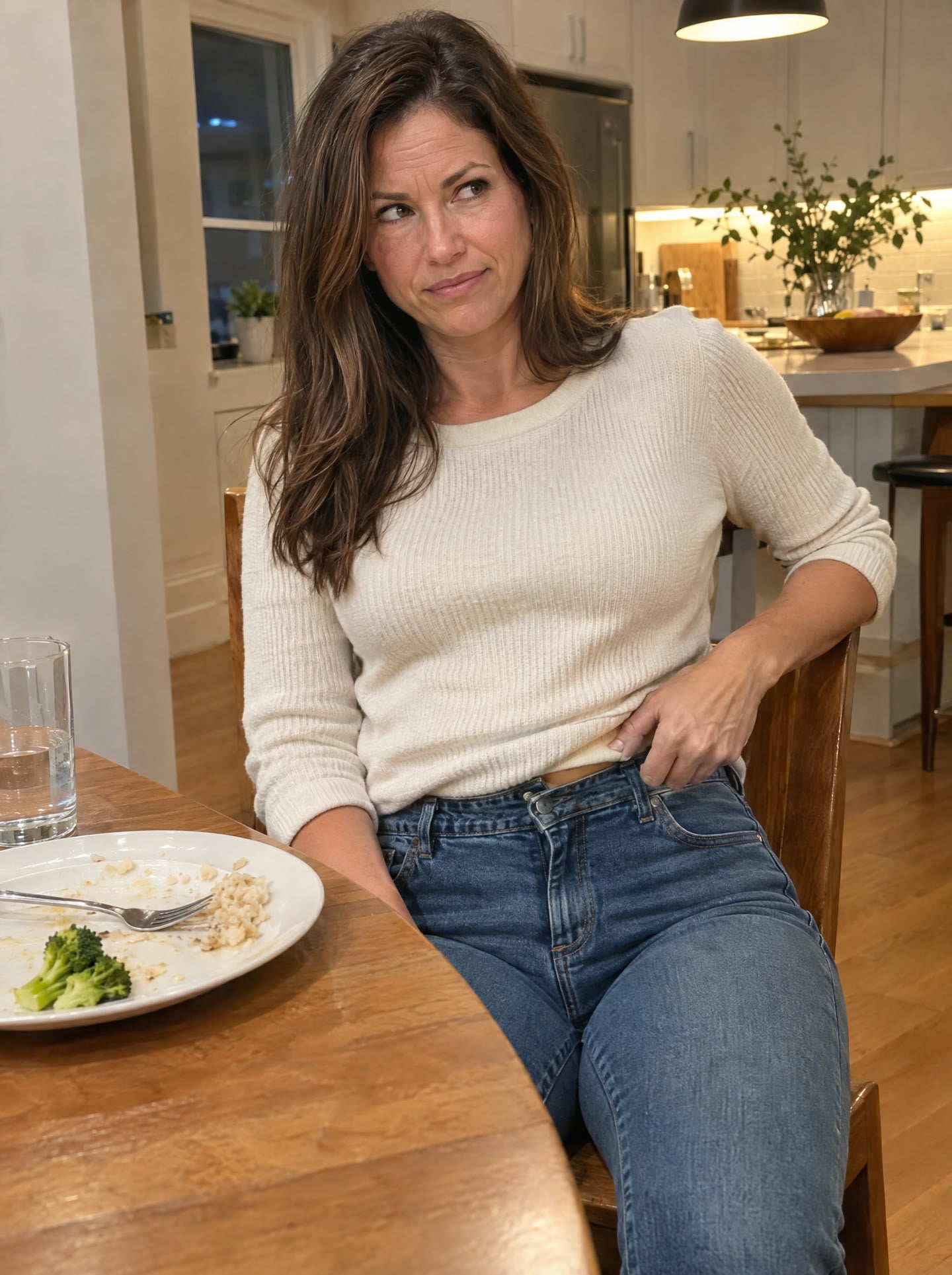
It’s 8:40 on a Tuesday night, and dinner was nothing wild. Grilled chicken, rice, broccoli with a few white beans and a side salad. A slice of bread and butter, then a coffee with milk and one square of chocolate.
Now the waistband of your jeans is pressing a line into your stomach, so the top button comes undone under the table. And the meal still feels like it’s sitting exactly where you left it.
How Tuesday went
- 7:30 a.m.Jeans on, button done. Stomach flat.
- 12:30 p.m.A big salad with chicken and cheese. The good choice.
- 3:00 p.m.That salad still sits like a brick.
- 4:30 p.m.The waistband starts to press.
- 7:00 p.m.Dinner at home. Normal portions, nothing fried.
- 8:40 p.m.Top button undone. Same as last night.
So you go back over the day looking for the culprit. The bread? The beans? The cheese on that salad?
Some nights it’s pizza. Some nights it’s the roasted broccoli you ate to be good. Most nights you can’t point to one thing at all.
Here’s what almost nobody explains: it may not be what you ate. It may be what happens to it after it leaves your plate.
Tried the tea, the cut-out list, a probiotic? There’s a reason none of it stuck.
What you’ve already tried
You weren’t doing it wrong. You were doing half of it.
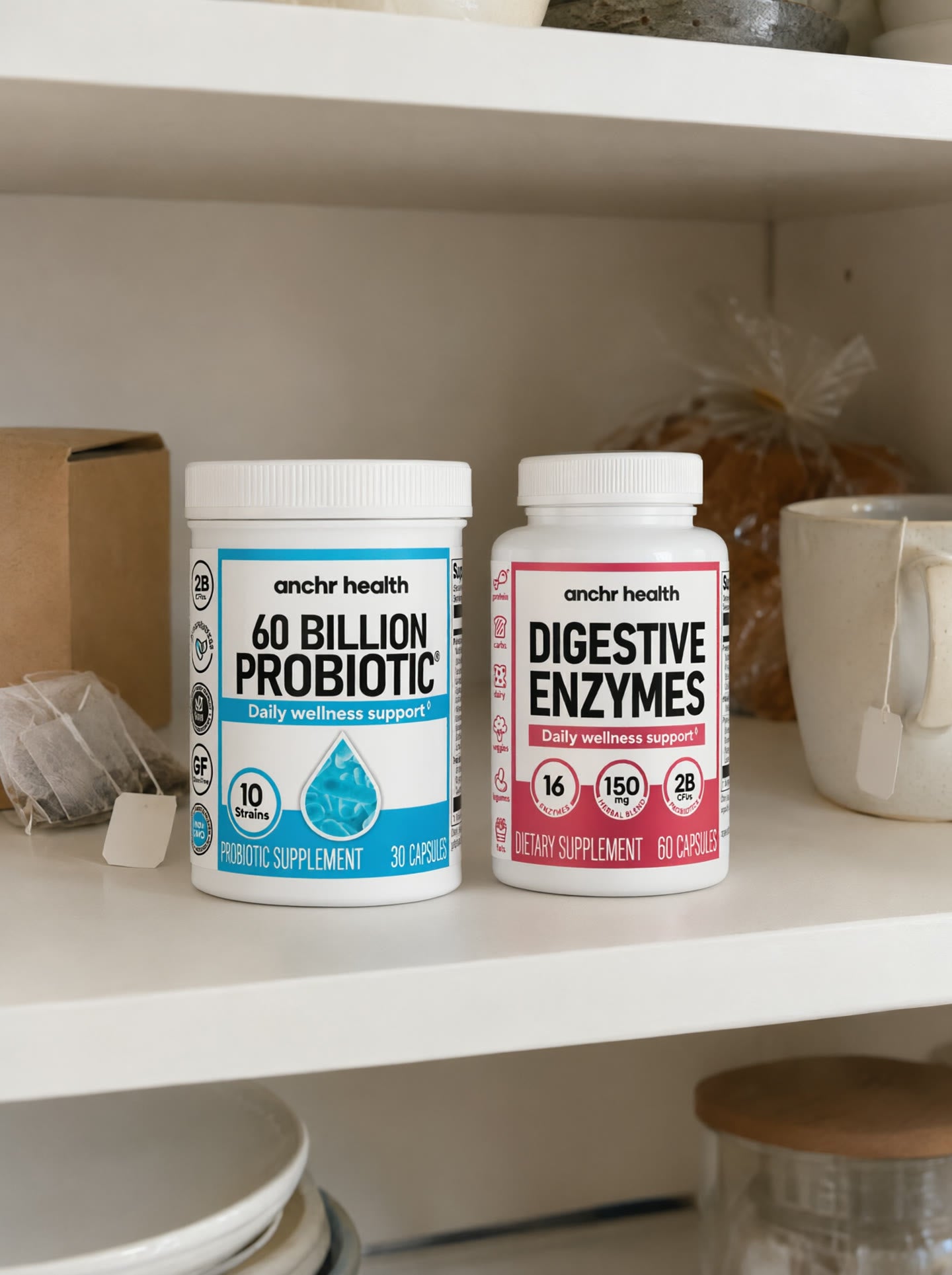
You probably have a small collection going by now: a box of tea, a probiotic you can’t tell is working, a list of foods you’ve quietly stopped eating.
None of it was a bad idea. Most of it only covered one piece of the job.
Peppermint tea after dinner. People have sipped it after meals for a long time, and it’s a habit worth keeping. But tea has no digestive enzymes, so it can’t break the meal down.
Cutting bread, dairy and pasta. It can seem to help, until your “safe” list gets shorter every month. And the meals you do eat still have to be broken down.
Eating slower, eating smaller. Good habits, and chewing does start the job: saliva works on starch. But most of the breakdown happens further down, out of your hands.
A probiotic on its own. It looks after the bacteria in your gut every day, but it brings no digestive enzymes for tonight’s dinner. That’s half.
An enzyme on its own. Its enzymes work on the meal you take it with. The everyday job, a daily probiotic for your gut’s bacteria, is a separate one. That’s the other half.
So if that shelf never quite added up, it may be because each thing on it was only ever built for one job.
What most of us were told
Why the healthy salad can leave you tighter, and two more half-truths
None of these are silly. Most of us picked them up from labels, friends and late-night searching. Each one is half true.
What we tell ourselves
A salad is the safe lunch.
What’s really going on
A big salad is full of plant fiber, and your body makes no enzyme of its own for cellulose, the tough fiber in leaves and stems. What isn’t broken down travels on to the bacteria in your large intestine, and fermenting makes gas. It’s one reason a light lunch can still leave you feeling tight later.
None of that makes salad a bad lunch. Cellulase, one of the 16 enzymes in the pink capsule, is an enzyme that works on cellulose.
What we tell ourselves
Live bacteria just die in your stomach acid anyway.
What’s really going on
Stomach acid really is a hurdle for live bacteria. That’s why the blue bottle’s probiotic comes in acid-resistant capsules, designed to reach the gut. More on that trip just below.
What we tell ourselves
Enzymes are for people with something wrong.
What’s really going on
Your body releases digestive enzymes every time you eat, mostly from the pancreas. That’s normal digestion, for everyone. A mealtime enzyme simply adds more at the table: 16 kinds in the pink bottle, each matched to a part of the meal.
Follow Tuesday’s dinner
What happens to your dinner after the last bite
Digestion is a trip, not a moment. A 7:00 dinner can still be sitting in your stomach at 8:40, and the whole trip takes hours. Here’s the route in plain words, and where each capsule comes in.
Your mouth.
Chewing breaks food into smaller bits, and your saliva starts on the starch in the rice and bread right away.
Pink capsule: you swallow it with your meal, so its 16 enzymes go down with the food.
Your stomach.
Strong acid and churning turn the meal into a thick soup and start breaking down the protein. A full dinner can take a few hours to move on from here, which is part of that heavy, full feeling at 8:40. That acid is good at its job, and it’s tough on live bacteria.
Blue capsule: it’s acid-resistant, made to get through your stomach and designed to reach the gut.
Your small intestine.
Your own digestive enzymes, mostly sent from the pancreas, finish breaking down protein, starch and fat. Whatever is small enough is taken into your body. Whatever isn’t fully broken down keeps moving.
Your large intestine.
The leftovers arrive here, where trillions of bacteria live. They ferment what wasn’t fully broken down, and fermenting makes gas. It’s one reason a meal can feel tighter hours after you’ve finished it.
Blue capsule: probiotics are most effective once they reach the intestines, which is where its 60 billion live cultures are headed.
Other everyday things that add to that tight feeling
- Eating fast and swallowing air
- Fizzy drinks
- Big portions
- Salty or fatty meals
- Being backed up
- Hormone shifts around your period and in your 40s
A capsule can’t change your hormones or how fast you eat. The duo is built for two parts of the trip above: breaking the meal down (pink) and the bacteria that live in your gut (blue).
So what’s in the pink capsule, exactly? Here’s Tuesday’s plate, matched enzyme by enzyme.
The pink bottle, explained
Your plate, decoded
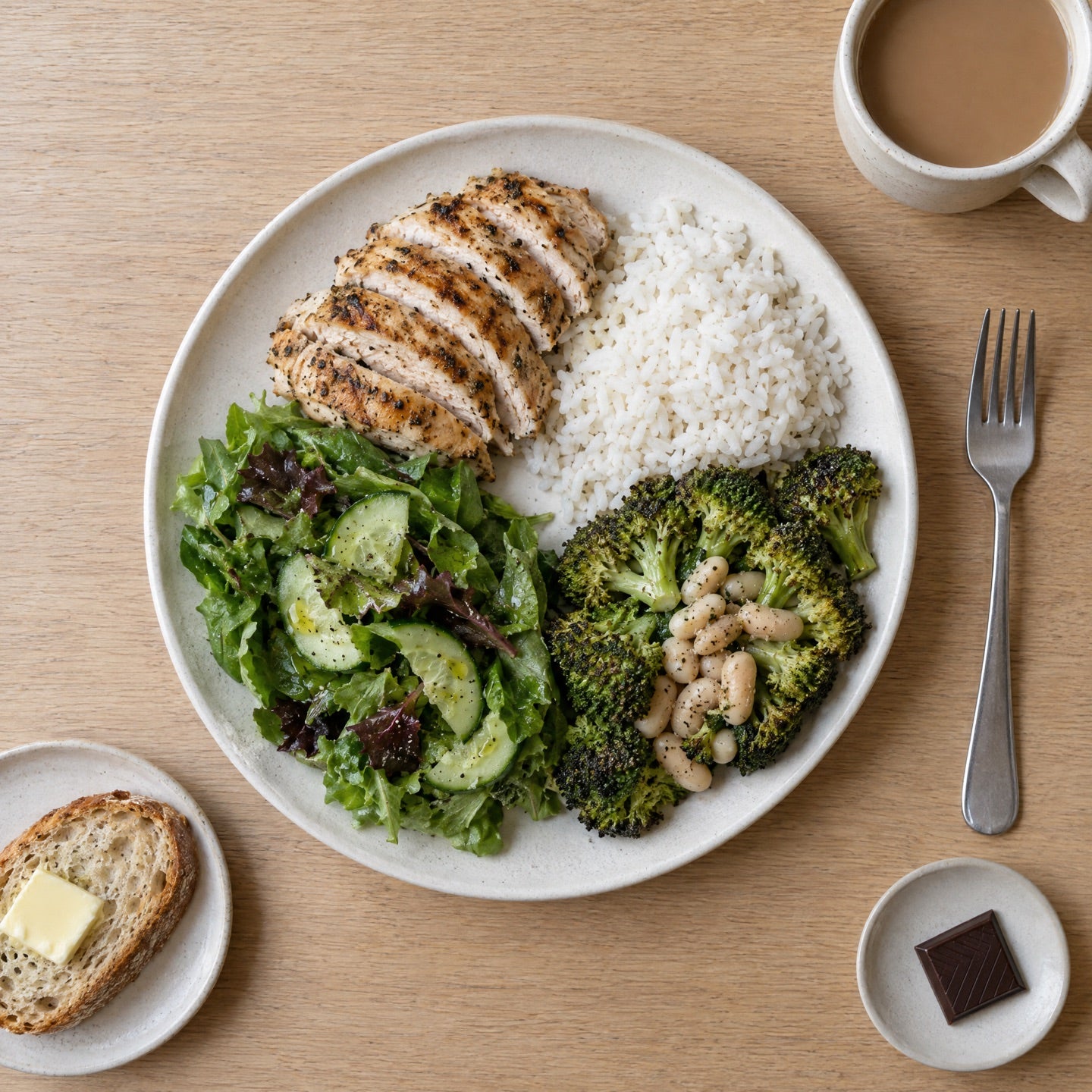
Remember Tuesday’s dinner? Here it is from above.
Names like glucoamylase mean nothing at the table. So here is every one of the 16 enzymes in the pink capsule, sorted by the food it works on. Find your plate.
Tuesday’s dinner. Clockwise from the top: grilled chicken, rice, broccoli and white beans, salad greens with cucumber and olive oil. On the side: bread and butter, coffee with milk, a square of chocolate.
| Part of the meal | On your plate | Enzymes on the label | What they do, plainly |
|---|---|---|---|
| Protein6 enzymes | Chicken, beans, eggs, fish, steak | Protease 3.0, Protease 4.5, Protease 6.0, Peptidase, Bromelain, Papain | Proteases cut protein into smaller pieces; peptidase snips those into the smallest bits. The numbers just tell the three proteases apart: each is named for the acidity it works best at. Bromelain (pineapple) and papain (papaya) are fruit enzymes that work on protein too. |
| Starch2 enzymes | Rice, bread, pasta, potatoes | Amylase, Glucoamylase | Amylase breaks starch into shorter chains (your saliva makes some too). Glucoamylase finishes those chains into simple sugar. |
| Table sugar1 enzyme | The square of chocolate, dessert, anything sweetened | Invertase | Splits table sugar into its two halves. |
| Milk sugar1 enzyme | The milk in your coffee, ice cream, soft cheese | Lactase | Breaks down lactose, the natural sugar in milk. Lactase is an enzyme, and the pink bottle is formulated without dairy. |
| Fat1 enzyme | Butter on the bread, olive oil on the salad, cheese, fried chicken | Lipase | Breaks down fat. |
| Plant fiber4 enzymes | Salad greens, raw vegetables, oats, whole grains | Cellulase, Hemicellulase, Xylanase, Beta-Glucanase | Cellulase is the one from the salad above: it works on cellulose, the tough fiber in leaves and stems. The other three work on the fibers in grains, oats and vegetables. |
| Bean and broccoli sugars1 enzyme | White beans, lentils, broccoli, cabbage | Alpha-Galactosidase | These foods carry sugars your stomach and small intestine don’t fully break down, so gut bacteria ferment them into gas. Alpha-galactosidase is the enzyme that breaks those sugars down. |
6 + 2 + 1 + 1 + 1 + 4 + 1 = all 16, in one capsule with your meal.
Third-party tested for safety, purity, and potency.
Also in this capsule
Peppermint leaf and ginger root, a 150 mg herbal blend.Two herbs people have reached for after big meals for a long time. So the peppermint from your after-dinner tea is in here too, next to 16 enzymes the tea doesn’t have.
Its own 3 probiotic strains, 2 billion live cultures (2B CFU).Bacillus subtilis, Bacillus coagulans and Bacillus clausii come from a different family than the 10 in the blue bottle, so the duo carries 13 named strains in all. Like those 10, they’re live cultures, there to support the balance of bacteria in your gut.
A little prebiotic fiber.Organic inulin from Jerusalem artichoke, organic acacia fiber and inulin from chicory, in a 159 mg blend with those 3 strains. It’s fiber the good bacteria in your gut feed on.
1 capsule with a meal, 60 capsules in the bottle: mealtime support for the foods you already eat.
The blue bottle, explained
60 billion live cultures, and what that number means
60 billionlive cultures per capsule
Labels count them in CFUs, short for colony-forming units. Think of it as a headcount of live cells.
220 mg probiotic blend · 10 strains · 1 capsule a day · 30 capsules in the bottle
The Lactobacillus family, 6 strains. The family you know from yogurt, kefir, cheese and sauerkraut.
The Bifidobacterium family, 4 strains. The other family most often used in probiotics, and longtime residents of the large intestine.
All 10 are live cultures, there to support the balance of bacteria in your gut.
Where you’ve met these 10 strains before
- Lactobacillus acidophilus: one of the best-known cultures in yogurt and kefir.
- Lactobacillus bulgaricus: one of the two classic cultures that turn milk into yogurt.
- Lacticaseibacillus casei: found in fermented milk and many cheeses.
- Lacticaseibacillus paracasei: a close cousin of casei, also found in fermented dairy.
- Lactiplantibacillus plantarum: “plant” is in the name. You’ll find it in sauerkraut, kimchi and pickles.
- Ligilactobacillus salivarius: named for saliva. It lives naturally in the human mouth and gut.
- Bifidobacterium lactis: common in yogurt and fermented milk.
- Bifidobacterium bifidum: the family’s namesake. “Bifid” means split in two, after its forked shape.
- Bifidobacterium longum: one of the most common bifidobacteria in the adult gut.
- Bifidobacterium breve: one of the first bifidobacteria to settle in the gut early in life.
If some names look long and new, blame 2020. That year scientists split the old Lactobacillus family into new groups, so L. casei became Lacticaseibacillus casei. Same bacteria, longer first name.
Food for the bacteria.A 150 mg prebiotic blend rides in the same capsule: organic inulin from Jerusalem artichoke, organic inulin from chicory and organic acacia fiber. Prebiotic fiber is fiber your body doesn’t digest but your good bacteria do. It’s a little fiber, not a fiber drink.
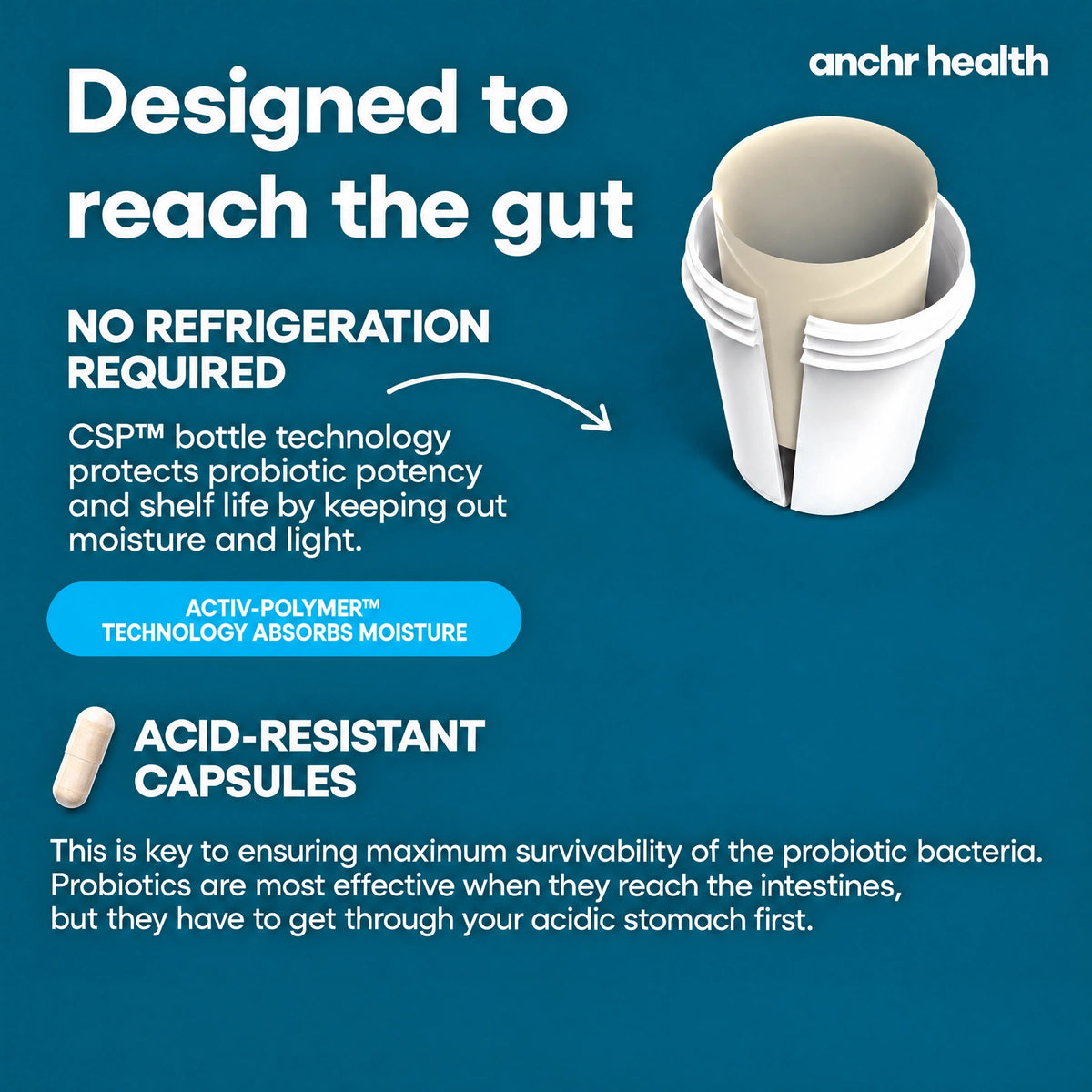
Acid-resistant capsules.Live cultures have to get through your acidic stomach first, and probiotics are most effective when they reach the intestines. This capsule is built for that trip.
No refrigeration required.The bottle keeps out light and moisture, and a moisture-absorbing material in the bottle itself protects the probiotic’s potency and shelf life.
Developed to support overall wellness, digestive health, immune health and regularity.
A gut routine you’ll actually stick to
Digest anything comfortably.
Enzymes break down proteins, carbs, fats, even dairy and vegetables, so nothing sits heavy or causes discomfort.
Rebuild your gut from the inside
60B CFU across 10 strains, each named on the label, work to restore your microbiome and keep it balanced long-term.
No more post-meal bloat
Stop dreading meals. The bundle breaks food down before it builds up, so you feel light, not loaded, after eating.
Finally, a predictable routine
No more unpredictable gut days. The bundle supports consistent digestion so your body runs on a schedule you can count on.
60-day risk-free guarantee
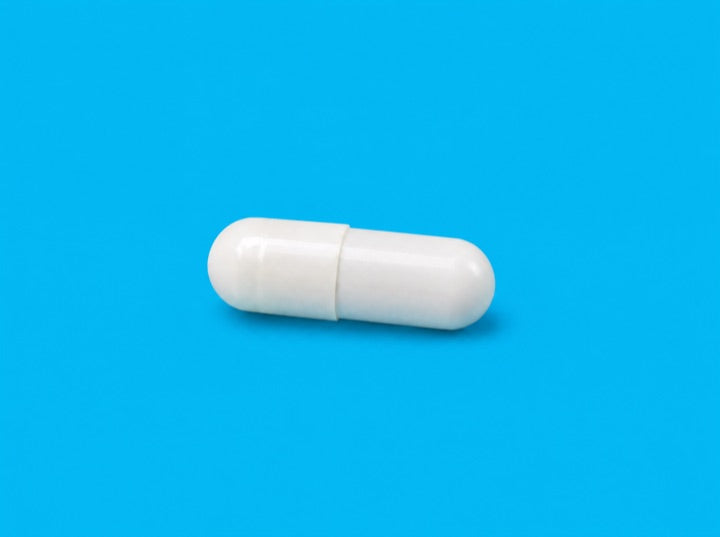
Step 1
Daily probiotic
Take 1 capsule of our broad-spectrum 60 Billion Probiotic to support your gut health and overall wellness.
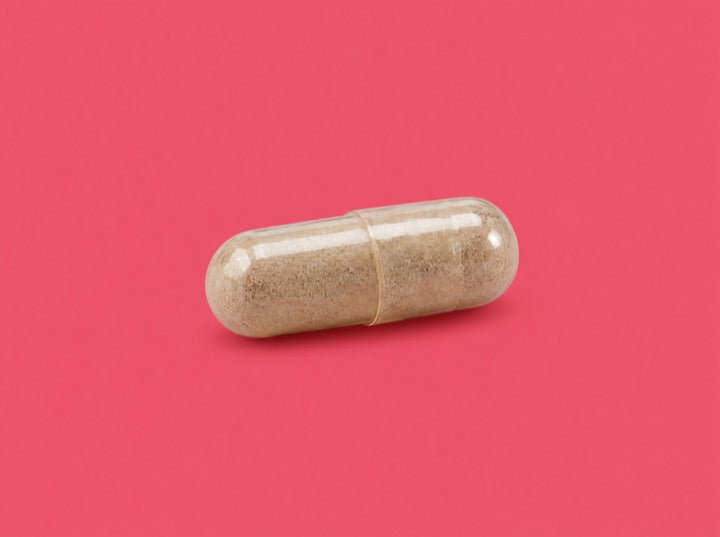
Step 2
Mealtime support
Take 1 capsule of Digestive Enzymes with a meal for comfort and support digesting the foods you love.
Two capsules. One simple routine.
No complicated schedules. No handfuls of pills. Just two capsules that fit into the life you already have.
- 1With your biggest meal. Take 1 enzyme capsule with your largest meal. It gets to work right away, breaking down fats, proteins and carbs before they cause bloating or discomfort.
- 2Once a day, any time. Take 1 probiotic capsule daily: morning, night, whenever works for you. It supports your gut microbiome quietly in the background, every single day.
- 3Trust the process. Most people notice a difference within 2–3 weeks. Keep going: the longer you take it, the better your gut gets. That’s just how probiotics work.
How to read a gut supplement label
Seven things to check on any label. Here’s how ours reads.
You don’t need a science degree to judge a bottle. Turn it around and look for these seven things. Then hold ours to them.
| Look for | Why it matters | On our label |
|---|---|---|
| 1A live-culture count you can read | It tells you how many live cultures are in each capsule. A count alone isn’t the whole story, so check rows 2 to 4 too. | 60 billion CFUs per capsule in the blue bottle. 2 billion in the pink. |
| 2Every strain and every enzyme named | You should be able to see exactly what’s inside, by name. An enzyme blend is only as useful as the foods it covers. Count them. | All 10 strains in the blue bottle, all 3 in the pink and all 16 enzymes are printed by name. The 16 cover protein, starch, table sugar, milk sugar, fat, plant fiber and bean sugars. |
| 3Food for the bacteria | Prebiotic fiber is what good gut bacteria feed on. | Prebiotic fiber in both capsules: inulin from Jerusalem artichoke and chicory, plus organic acacia fiber. |
| 4A capsule made for stomach acid | Live bacteria have to get through your stomach first. | Acid-resistant capsules in the blue bottle, the everyday probiotic, designed to reach the gut. |
| 5Storage that fits your week | A bottle that has to live in the fridge is an easy one to leave behind. | No refrigeration required for the probiotic. Its bottle keeps out moisture and light. |
| 6A clear “formulated without” list | If you avoid certain foods, this is where you find out. | Both bottles have one, typed out word for word below. |
| 7Directions you’ll actually follow | A routine you can’t keep is a bottle you stop taking. | 1 blue capsule a day. 1 pink capsule with a meal. Or take both together at a meal. |
Both Supplement Facts, as text
The blue bottle, as text: 60 Billion Probiotic
Supplement Facts
- Serving size 1 capsule. 30 servings per container.
- Probiotic Blend 220 mg, Total Probiotic Activity 60 Billion CFUs: Lacticaseibacillus casei, Lactobacillus acidophilus, Lacticaseibacillus paracasei, Ligilactobacillus salivarius, Lactiplantibacillus plantarum, Bifidobacterium lactis, Bifidobacterium bifidum, Bifidobacterium longum, Bifidobacterium breve, Lactobacillus bulgaricus.
- Prebiotic Blend 150 mg: Organic Inulin (from Jerusalem Artichoke), Organic Acacia Fiber, Organic Inulin (from Chicory).
- Other ingredients: vegetable capsule (hypromellose, gellan gum), rice flour, rice hull concentrate, gum arabic, sunflower oil.
Front label
- 10 Strains · Probiotic Supplement · 30 Capsules
Also on our product images
- Developed to support: Overall Wellness, Digestive Health, Immune Health, Regularity.
- Formulated without: Dairy, Soy, Gluten, Wheat, Peanuts, Tree Nuts, Sesame, Eggs, Fish, Shellfish, Color Additives, Artificial Sweeteners or Preservatives.
- Manufactured in a facility that also processes dairy, soy, gluten, wheat, tree nuts, peanuts, eggs, fish, shellfish and sesame.
The pink bottle, as text: Digestive Enzymes
Supplement Facts
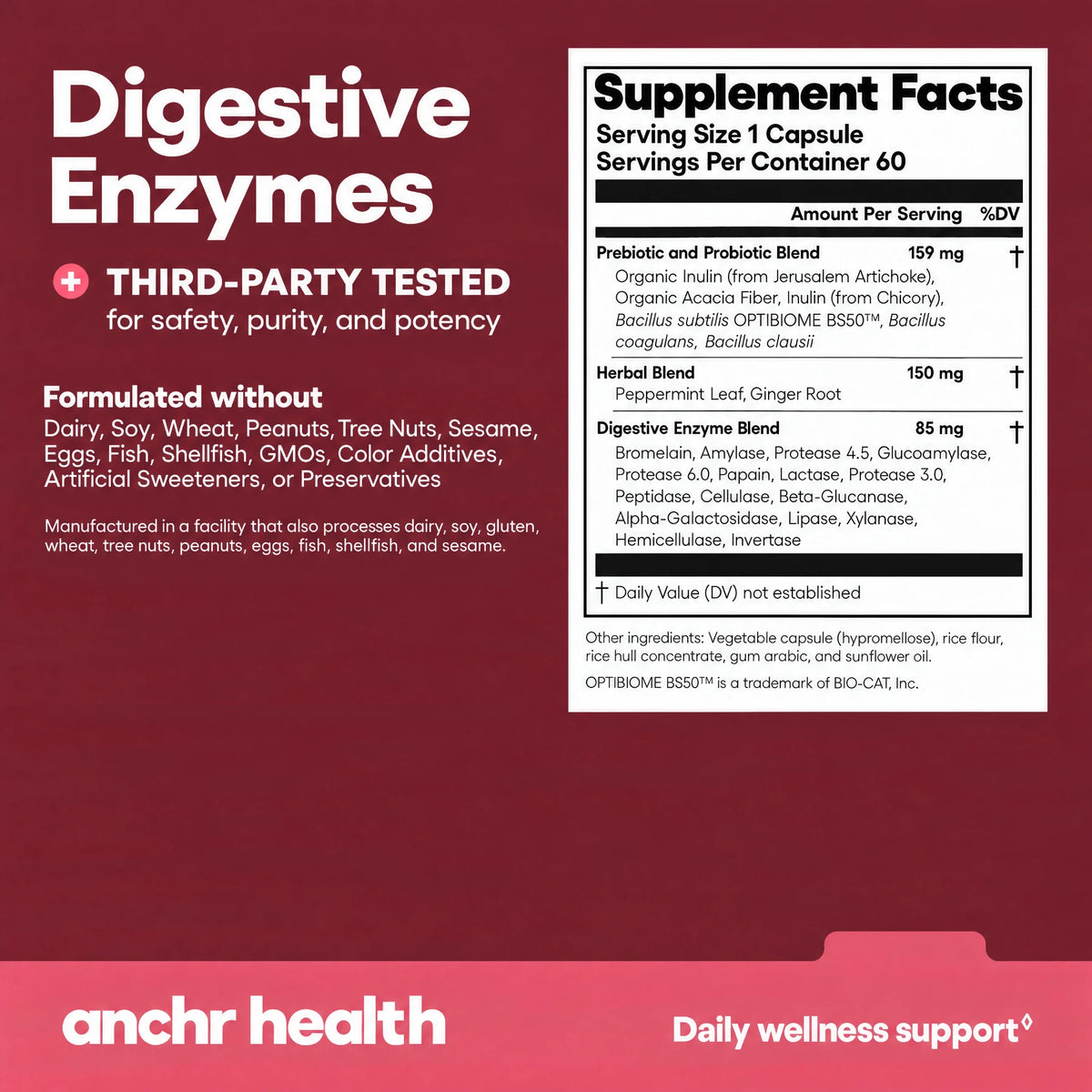
- Serving size 1 capsule. 60 servings per container.
- Prebiotic and Probiotic Blend 159 mg: Organic Inulin (from Jerusalem Artichoke), Organic Acacia Fiber, Inulin (from Chicory), Bacillus subtilis, Bacillus coagulans, Bacillus clausii.
- Herbal Blend 150 mg: Peppermint Leaf, Ginger Root.
- Digestive Enzyme Blend 85 mg: Bromelain, Amylase, Protease 4.5, Glucoamylase, Protease 6.0, Papain, Lactase, Protease 3.0, Peptidase, Cellulase, Beta-Glucanase, Alpha-Galactosidase, Lipase, Xylanase, Hemicellulase, Invertase.
- Other ingredients: vegetable capsule (hypromellose), rice flour, rice hull concentrate, gum arabic, sunflower oil.
Front label
- 16 Enzymes · 150 mg Herbal Blend · 2B CFU Probiotic · Dietary Supplement · 60 Capsules
Also on our product images
- Third-party tested for safety, purity, and potency.
- Formulated without: Dairy, Soy, Wheat, Peanuts, Tree Nuts, Sesame, Eggs, Fish, Shellfish, GMOs, Color Additives, Artificial Sweeteners, or Preservatives.
The two “formulated without” lists aren’t identical. Gluten is on the probiotic’s list only, so read each one if you avoid it.
On this page: 1 blue capsule a day, and 1 pink capsule with a meal.
Read the full Supplement Facts, directions and warnings on each bottle before use.
Side by side
Could you just take one? Here’s what each bottle leaves out.
Here are our two bottles side by side. Every number in this table comes straight off the labels.
| Our probiotic alone | Our enzymes alone | The duo | |
|---|---|---|---|
| Which job it covers | The everyday job | The meal job (plus 2 billion live cultures) | Both jobs |
| When you take it | 1 capsule a day | 1 capsule with a meal | One for your day, one for your meal. Or both together at a meal. |
| Digestive enzymes for the meal | None | 16, in an 85 mg blend | 16, at the meal you take it with |
| Live cultures | 60 billion CFUs from 10 strains | 2 billion CFUs from 3 Bacillus strains | 13 named strains across two capsules |
| Prebiotic fiber | 150 mg blend | In a 159 mg blend with the 3 strains | In both capsules |
| Peppermint leaf and ginger root | None | 150 mg herbal blend | Included |
| Capsules in the bottle | 30 | 60 | 30 + 60 in every duo |
Read down the last column: 16 enzymes for the meal, 13 named strains, prebiotic fiber in both capsules. Neither bottle gets you all of that on its own.
One for your day. One for your meal.
60-day money-back guarantee, opened bottles included
Under a dollar a day vs. what a struggling gut actually costs you
Here’s the real math on chasing gut relief one fix at a time.
Hack Your Tummy Bundle
- About $0.83 a day for 1 duo, and as low as $18.99 per duo on Buy 3 Get 2 Free. Two products, one routine.
- 60 billion CFUs from 10 strains, each named on the label, in every probiotic capsule.
- 16 digestive enzymes that break the meal down before it turns into bloating.
- Acid-resistant capsule designed to carry the cultures past stomach acid.
- Enzymes work at your first meal. Gut changes land between day 3 and day 10.
- Buy 2 Get 1 Free and Buy 3 Get 2 Free bring every duo down to $19.99 or $18.99.
- 60-day money-back guarantee. Opened bottles included.
Everything else you’ve tried
- Buying a probiotic and an enzyme separately: $60+ a month and two subscriptions to manage.
- Refrigerated probiotics that lose potency the second they warm up: $30+ a bottle.
- Enzymes on their own: the meal goes down easier, the bacteria causing the bloat stay put.
- Daily yogurt and kefir for “gut health”: $35 a month and loads of sugar.
- Cutting out food after food until your menu is smaller but your gut is the same.
- A copay to be told “eat more fiber”: $40 plus the wait.
- Months of trial and error while nothing changes: priceless, and not in a good way.
Under a dollar a day to stop guessing and start feeling it.
60 days to decide
Try it for 60 days. Opened bottles count.
You can’t judge two bottles by reading about them. So open them, take them every day, and give the duo a real try. If it isn’t for you, you get a full refund.
“We want you to actually try the product.”
Refer to our refund policy
- Your 60 days start the day your order is delivered.
- Not for you? Email help@anchrhealth.com with your order number within those 60 days.
- Send the bottles back, opened ones included (return shipping is on you unless the order arrived damaged or incorrect).
- You get a full refund. This applies to every order.
From Anchr, the brand behind this duo: 14,403+ customers, rated 4.8 on Trustpilot.
Refills monthly
Honest answers
Your questions, answered.
Still wondering about something? Email help@anchrhealth.com and we’ll help.
I’ve taken a probiotic before and felt nothing. Why is this different?
Because a probiotic on its own only does half the job. The duo adds 16 digestive enzymes for the meal on your plate, the blue capsule is acid-resistant and designed to reach the gut, and all 10 strains are named on the label, with prebiotic fiber in the same capsule.
How fast will I notice anything?
Enzymes go to work at your first meal. Gut changes land between day 3 and day 10, and most people notice a difference within 2–3 weeks. Keep going: the longer you take it, the better your gut gets.
Does any of it need to be refrigerated?
No. The probiotic bottle keeps out light and moisture, with a moisture-absorbing material built into the bottle, so it needs no fridge.
I already take a probiotic. Why add enzymes?
Because they do different jobs. A probiotic looks after the bacteria in your gut every day, but it isn’t a dose of digestive enzymes, so the meal on your plate is a separate job.
The pink capsule covers that one: 16 enzymes matched to protein, starch, sugar, milk sugar, fat, plant fiber and the sugars in beans and broccoli. 1 capsule with a meal.
Probiotics never seemed to do anything for me. What’s different here?
We won’t promise how you’ll feel. Here’s what’s different, and you can check each one:
- the duo adds the meal job, with 16 digestive enzymes a probiotic on its own doesn’t carry
- the blue capsule is acid-resistant and designed to reach the gut
- all 10 strains are named on the label, with prebiotic fiber in the same capsule
And you get 60 days from delivery to decide, opened bottles included.
Is there a probiotic in the pink bottle too?
Yes, a small one. The pink capsule carries 2 billion live cultures from 3 Bacillus strains, next to its 16 enzymes and a little prebiotic fiber.
The blue capsule is the everyday one: 60 billion live cultures from 10 different strains. Between the two, that’s 13 named strains.
Do I have to follow a food list?
No. It isn’t a diet, and it doesn’t come with a food list. The pink capsule is mealtime support: lactase for milk sugar, amylase for starch, lipase for fat.
If you avoid a food because of an allergy or a medical reason, keep avoiding it. Check each bottle’s “formulated without” list; gluten is on the probiotic’s list only.
How do I take them, and how many capsules come in a duo?
The blue probiotic is 1 capsule a day. The pink enzymes are 1 capsule with a meal, and you can take both together at a meal if that’s easiest.
A duo holds 90 capsules: 30 in the blue bottle and 60 in the pink. The probiotic needs no fridge; its bottle keeps out moisture and light.
Will my stomach feel any different when I start?
Some people notice a little extra gas when they begin a new probiotic or new fiber. It’s worth knowing before you start.
If the duo isn’t for you, the 60-day guarantee covers opened bottles.
What are they made without? Is there dairy in the lactase?
Lactase is the enzyme that breaks down milk sugar, and the pink bottle is formulated without dairy.
- The probiotic is formulated without dairy, soy, gluten, wheat, peanuts, tree nuts, sesame, eggs, fish, shellfish, color additives, artificial sweeteners or preservatives. It is manufactured in a facility that also processes dairy, soy, gluten, wheat, tree nuts, peanuts, eggs, fish, shellfish and sesame.
- The enzymes are formulated without dairy, soy, wheat, peanuts, tree nuts, sesame, eggs, fish, shellfish, GMOs, color additives, artificial sweeteners, or preservatives.
Gluten is on the probiotic’s list only. Full allergen details are printed on each bottle.
Can I take them with medication, or while pregnant or nursing?
The warnings are printed on each bottle. Read them before you start and follow them.
What if it’s not for me?
Email help@anchrhealth.com within 60 days of delivery, then send the bottles back, opened ones included, for a full refund.
Return shipping is on you unless the order arrived damaged or incorrect, and the original shipping isn’t refunded.
- 60-day money-back guarantee
- Third-party tested
One problem. Two solutions. One bundle.
Bloating doesn’t have one cause, so one product was never going to fix it. The enzymes handle what you eat right now. The probiotics fix what’s been off for months. Together, they cover everything.
- Third-party tested
- Developed with doctors
- 60-day money-back guarantee